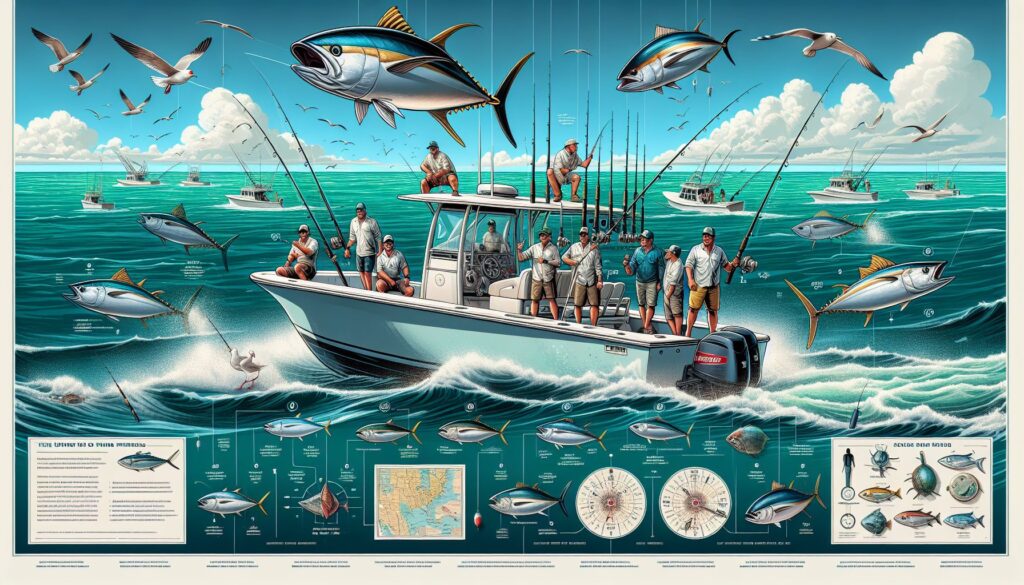
The Gulf of Mexico is an angler’s paradise, offering a diverse array of sportfishing opportunities. Among these, tuna fishing stands out as a premier challenge, with the yellowfin tuna being one of the most prized catches. Touted for its strength and speed, the yellowfin tuna provides the kind of fishing experience that can fill a sportsperson with tales to share for a lifetime. With proper techniques and an understanding of their environment, you too can join the ranks of those who have successfully reeled in these awe-inspiring fish.
Why the Gulf of Mexico is a Tuna Haven
Located off the coast of the United States, the Gulf of Mexico is teeming with marine life due to its warm temperatures and rich waters. Yellowfin tuna, in particular, find the Gulf’s conditions to be prime, making it a favorite destination for those seeking these elusive creatures. According to recent statistics, the biomass of yellowfin tuna in the Gulf of Mexico remains healthy, providing ample opportunities for recreational and commercial fishers alike.
Understanding Yellowfin Tuna Behavior
When targeting yellowfin tuna, knowledge of their behavior is key. These fish are highly migratory, moving across the Gulf’s vast waters in search of food and suitable breeding areas. They are typically found in deep offshore waters, which means that fishing for them usually involves a trip to the open ocean, sometimes overnight.
Gear and Tackle Recommendations
You’ll need strong, heavy-duty tackle to handle the potential size and fight of a yellowfin tuna. High-quality conventional reels paired with stout rods capable of handling line weights of at least 30 pounds are necessary. Braided lines give you the strength needed without sacrificing too much capacity, while fluorocarbon leaders provide near invisibility in water, helping to entice wary tuna.
Best Techniques for Yellowfin Tuna Fishing
The Gulf of Mexico offers several effective methods for catching yellowfin tuna, each requiring skill and practice. One popular technique for day fishing is trolling with artificial lures or rigged baitfish. This involves pulling lures behind a moving boat to mimic the movement of a school of fish. Another method is chumming with live bait, drawing tuna to the surface by creating a bait-rich area and then using hook-and-line or even fly-fishing gear to catch them.
For the best chance of success, consider booking a professional charter service. Experienced captains know the waters, the habits of the tuna, and the most effective fishing techniques.
If You’re Going It Alone
For those who prefer to take their own boats out, remember to carefully plan the trip. Check weather conditions, know navigation routes, and remember that yellowfin tuna often congregate near underwater structures like oil rigs, where baitfish thrive. Use fishfinders and GPS to locate these areas and to identify schools of tuna.
Conservation Practices
It’s essential to practice conservation-minded fishing. Adhere to the regulations set forth by the Gulf States Marine Fisheries Commission, including size and bag limits. Ethical fishing ensures the sustainability of yellowfin tuna populations for future generations of anglers to enjoy.
Final Thoughts on Tackling Yellowfin Tuna
Fishing for yellowfin tuna in the Gulf of Mexico can be an extraordinary experience, provided you approach it with respect, preparation, and the appropriate techniques. Remember to be patient and persistent. The thrill of hauling in one of these magnificent fish is a reward that is well worth the effort. So, gather your gear, study their patterns, and embark on an adventure that could lead to one of the most memorable catches of your life. Good luck, and tight lines!