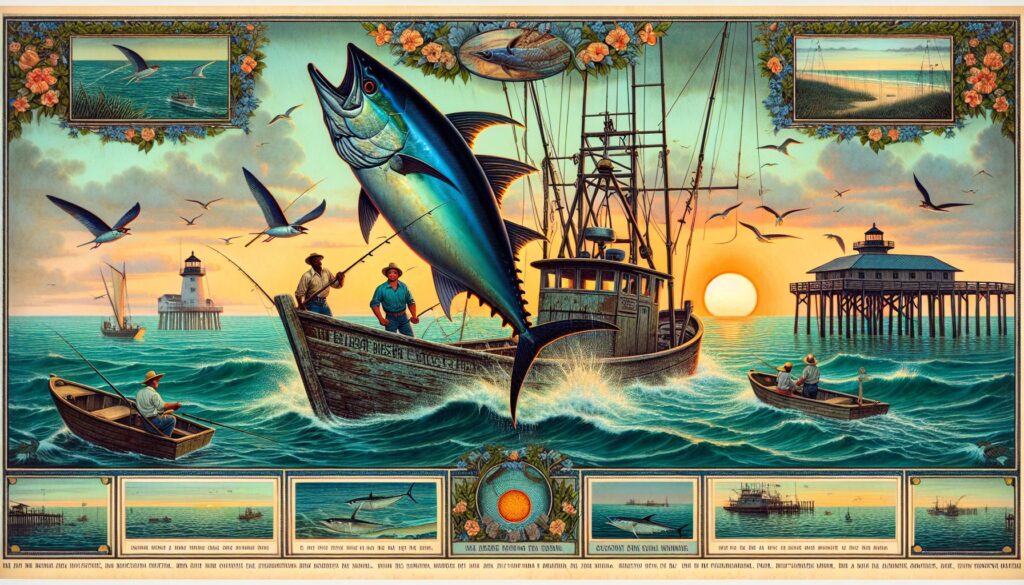
The Gulf of Mexico, with its warm waters and diverse marine life, is a haven for fishing enthusiasts, especially those looking for the thrill of catching the mighty yellowfin tuna. Prized for their speed and strength, yellowfin tunas are a challenging catch, making the victory of reeling one in all the more rewarding. Statistics reveal that the Gulf’s tuna fishing industry has boomed, with commercial fisheries in the United States pulling in over 9.3 million pounds of yellowfin and a recreational catch of about 3.6 million pounds annually. This guide will delve into the nitty-gritty of successful tuna fishing in this prolific body of water, ensuring your next trip is both exciting and fruitful.
Understanding Yellowfin Tuna
Before setting sail for the deep blues, it’s crucial to know your target. Yellowfin tuna (Thunnus albacares) are a fast-swimming pelagic species that can weigh up to 400 pounds, though the average catch in the Gulf of Mexico usually ranges between 30 and 70 pounds. Their streamlined bodies and unique, sickle-shaped fins enable them to navigate the warm waters with astonishing speed and agility, making them a formidable foe for any angler.
Best Times and Places to Fish for Yellowfin Tuna
Yellowfin tuna can be found throughout the Gulf of Mexico, but they tend to favor areas with specific conditions. The Flower Garden Banks, the Mississippi Canyon, and oil rigs off the Louisiana coast are particularly famous for yellowfin hotspots, often due to the abundance of baitfish and ideal water temperatures that range from 70 to 85 degrees Fahrenheit.
There is a prime time for every fishing adventure, and for yellowfin tuna in the Gulf, it’s typically early summer through late fall. However, these fish are present all year round, with migrations and feeding patterns shifting according to water temperatures and currents.
Gear and Techniques for Tuna Fishing
When you’re aiming to land a yellowfin tuna, gear selection becomes essential. High-quality, heavy-duty rods and reels capable of handling line weights from 30 to 130 pounds will give you the necessary backbone to fight these strong swimmers. The choice of lures and baits is similarly critical, with live bait such as blue runners or threadfin herring often proving irresistible to yellowfin.
Now that you’re equipped, let’s talk technique. Offshore trolling with artificial lures or rigged baits is a successful approach, allowing you to cover more area and increase your chances of a bite. Chumming near oil rigs or other structures, and then free-lining live bait into the slick can also coax yellowfin to the surface. Another popular method is the use of kite fishing, wherein a live bait is dangled at the water’s surface, simulating an easy target for the tuna below.
Conservation Measures
It’s important to mention that the pursuit of yellowfin tuna comes with a responsibility. In order to maintain healthy fish populations and ocean ecosystems, regulations are in place to ensure sustainable fishing practices. Size and bag limits vary, so make sure to check the latest rules from the National Oceanic and Atmospheric Administration (NOAA) before heading out.
Planning Your Gulf Tuna Fishing Adventure
A successful fishing trip requires more than just knowing where to go and what tactics to use; it’s about the entire experience. Here’s what to consider when planning your Gulf tuna fishing adventure.
Choosing a Charter Service
The Gulf of Mexico is dotted with numerous fishing charters, but not all are created equal. Look for a charter service with experienced captains who know the local waters intimately. You’ll want a crew that can navigate to the most promising fishing spots and has a proven track record for locating and catching yellowfin tuna.
What to Bring
Apart from the tackle, there are a few essentials for your trip. Make sure to pack sun protection, including a hat, sunglasses, and sunscreen, as well as sea-sickness medication if you’re prone to motion sickness. Don’t forget proper attire – it can get chilly on the open water even if it’s warm onshore.
Staying Safe
Safety should always be a top priority when embarking on any fishing trip. Ensure that the chosen charter service has all the necessary safety equipment, and don’t be afraid to inquire about their safety procedures and emergency protocols. Always follow any instructions given by the crew and wear a life jacket when required.
Maximizing Your Catch
While there’s no foolproof formula for catching yellowfin tuna, a few tips can improve your odds significantly. Pay attention to water temperatures and current edges, which often entice baitfish, subsequently drawing in tuna. Utilizing fish-finding technology can also be a huge advantage in locating schools of yellowfin.
The Role of Patience and Perseverance
Anyone who’s been fishing knows it’s as much about patience as it is about skill and equipment. Yellowfin tuna fishing in the Gulf of Mexico is no different. Be prepared for long waits and don’t get discouraged if success isn’t immediate. Perseverance often pays off when you’re after a challenging catch like the yellowfin.
Learning from Experience
Finally, every trip on the Gulf’s waters is an opportunity to learn. Each encounter with yellowfin tuna will teach you something new about their behavior and how to refine your tactics—a surefire way to grow into a seasoned angler.
Conclusion
Tuna fishing in the Gulf of Mexico can be an exhilarating experience, offering both the joy of the sport and the beauty of the open water. With the proper knowledge, equipment, and techniques in hand, not to mention a dose of patience, you’re well on your way to an unforgettable angling adventure. Remember, it’s not just about landing the biggest fish; it’s about embracing the chase, respecting the ocean, and enjoying every moment spent at sea.
Embarking on a yellowfin tuna fishing journey in the Gulf of Mexico is sure to be rewarding. With awareness and respect for the craft and the environment, you may just come back with an epic fish tale of your own. So, plan carefully, choose wisely, and the Gulf’s blue depths might just yield the catch of a lifetime. Happy fishing!