


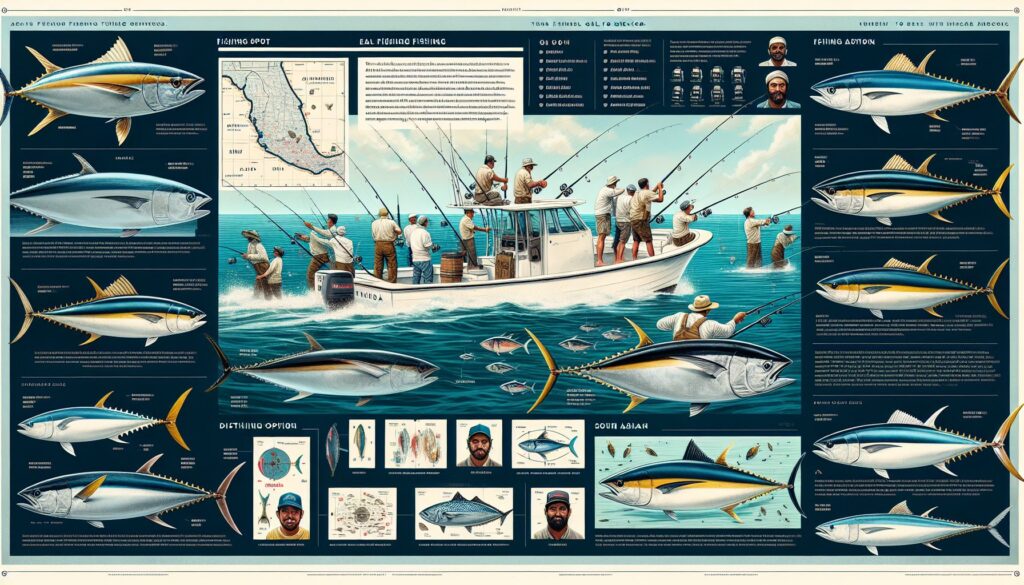
The Gulf of Mexico is a paradise for anglers, offering some of the richest fishing grounds in the United States, especially for those targeting the prized yellowfin tuna. Known for their power and the challenge they present even to seasoned fishermen, yellowfin tuna are not only a thrill to catch but also highly valued for their delicious meat. With fishing contributing over $41 billion annually to the Gulf economy, it’s no surprise that many flock to these waters for the chance to reel in a big one.
Understanding Yellowfin Tuna in the Gulf
Before setting out on your quest to catch yellowfin tuna, it’s crucial to have a solid understanding of your target. Yellowfin tuna (Thunnus albacares) are a migratory species that traverse the warm oceanic waters and are known to frequent offshore structures such as oil rigs, seamounts, and areas with significant temperature changes, known as temperature breaks. They’re fast swimmers, have a lifespan of about 6 to 7 years, and can weigh anywhere from 30 to over 200 pounds.
The Best Times and Places for Yellowfin Tuna in the Gulf
Timing is everything when it comes to tuna fishing. In the Gulf of Mexico, peak yellowfin tuna season typically runs from late spring to early fall, with the months of June through August being prime time. However, yellowfin can be caught year-round. They’re known to be around floating debris, weed lines, and warm water currents, with noted hotspots including the Mississippi Canyon and areas around oil rigs, which act as artificial reefs attracting baitfish and, subsequently, tuna.
Gear Up for Success
The right gear can turn an average day on the water into an unforgettable fishing trip. When tackling yellowfin, robust fishing gear is a must—think high-quality, heavy-duty rods, reels, and tackle. For yellowfin, conventional trolling setups with 50 to 80-pound test line are standard. Reels should have a high line capacity and smooth drag system because these fish are known for their powerful, long runs.
Techniques and Strategies
Successful yellowfin tuna fishing is akin to a well-orchestrated strategy game. When it comes to methods, trolling with lures like cedar plugs, skirted jigs, or diving plugs is effective. Sight casting to surface-feeding tuna can be exhilarating using poppers or live bait. For those with patience, chumming with live bait such as menhaden can draw yellowfin to the boat for some high-action fishing. Regardless of the method, keeping a keen eye on the marine weather forecast, sea surface temperature charts, and current fishing reports will provide invaluable insight into where the fish might be biting.
Conservation Matters
As the pursuit of yellowfin tuna intensifies, sustainable fishing practices become critical. Always adhere to the regulations set forth by the National Oceanic and Atmospheric Administration (NOAA), including size limits and bag limits to ensure yellowfin populations remain healthy for generations to come. Currently, regulations permit recreational anglers to catch three yellowfin tuna per person per day in the Gulf of Mexico.
Preparing for Your Trip
Every successful fishing expedition requires preparation. Aside from gear, consider hiring a professional charter service familiar with the Gulf’s vast fishing ground. These charters come equipped with experienced captains, whose skill in locating fish, knowledge of waterways, and safety protocols can make all the difference in your experience. Moreover, preparing physically and mentally for a potentially strenuous battle with a large yellowfin is equally important. These fish can fight for hours, and the victory of catching one is both a physical and psychological achievement.
Safety First
Safety should never take a backseat during any fishing adventure. Venturing into the Gulf means being prepared for any scenario. Life jackets, a well-equipped first aid kit, signaling devices, and an emergency beacon should be staples on your boat. Additionally, always inform a responsible party about your fishing plans and estimated return time.
Wrapping Up Your Adventure
After an exhilarating day on the water, proper care of your catch is essential. Yellowfin tuna should be bled immediately upon capture and stored on ice to preserve their high-quality flesh. Back on land, they can be prepared in numerous delectable ways—from sushi to grilling—rewarding you not only with the thrill of the catch but also with a feast fit for an angler’s effort.
Conclusion
Tuna fishing in the Gulf of Mexico is not just an angling activity; it’s an immersive experience that combines skill, patience, and respect for the marine ecosystem. Armed with the right knowledge, gear, and a responsible mindset, anyone can embark on this thrilling pursuit. Always remember that the journey’s success is not solely measured by the catch, but also by the memories created, the respect for the ocean, and the tales of the one that got away—until the next adventure.


